Help in unfamiliar territory. How therapies for post-COVID are being developed

Help in unfamiliar territory. How therapies for post-COVID are being developed

Although the massive disruptions to everyday life have noticeably decreased, the individual and societal burdens resulting from the coronavirus pandemic are still palpable. Post-COVID syndrome is now recognized as a clinical condition, and improving diagnosis, prevention, and treatment are driving medical research. Professor Thomas Urban, in collaboration with the Post-COVID Center in Senftenberg, developed a specific therapy concept for post-COVID-19 patients and presented his approaches, methodology, and some results in a report on his past research semester, which are also central topics of his second habilitation thesis.

Applied science in the medical field had already distinguished itself at the beginning of the pandemic through the immensely rapid development and provision of various effective vaccines and their continuous adaptation to different variants. Without these achievements in research and production by pharmaceutical institutions and companies, the consequences of COVID-19 would certainly have been far more drastic and protracted. The response to the pandemic highlights the innovative potential of application-oriented medical research and health tech, which combines state-of-the-art technologies with a focus on the physical and mental well-being of patients.

Research in progress

However, research in this area is by no means complete: on the one hand, there are always new variants of the virus and thus the need to adapt vaccines to continue to effectively protect vulnerable groups. On the other hand, medical development must address the physical and psychological effects of the pandemic. As with the development of vaccines, the novelty of the pathogen poses challenges for research, as the first step must be to understand the clinical picture itself and characterize its various manifestations. This foundation can then be followed by considerations of therapeutic measures.

Post-COVID syndrome is now a recognized clinical picture and is receiving widespread public attention, precisely because the long-term effects of COVID-19 affect quite a few people and burden them in their everyday lives. Even though the two phenomena are colloquially used synonymously, long COVID refers to persistent impairments lasting more than four weeks up to three months after infection, and post-COVID refers to the subsequent period.[1]

Similar to other infectious diseases, a coronavirus infection (SARS-CoV-2) can result in a variety of long-term effects that can impair organ systems such as the heart, lungs, brain, and other organs over a longer period of time. Long-term here refers to persistent symptoms twelve weeks after the actual infection, with the frequency of occurrence varying between 10% and 20%. The causative factors currently under discussion are overactivation of the immune system and thrombus formation in the microvascular system.[2] The consequences for humans are wide-ranging, from exhaustion (fatigue[3] ) to cardiovascular problems and balance disorders to nerve damage and persistent pain. This variance suggests the complexity of the syndrome, both in terms of its medical description and causal localization on the one hand, and therapeutic approaches on the other, whereby various disciplines of medicine must cooperate. In addition to alleviating symptoms, the goal of therapy is to prevent the condition from becoming chronic and to enable those affected to participate in their private and professional lives.

The blended therapy approach

An innovative therapeutic approach is suitable for this multidisciplinary approach, which Professor Urban analyzed during his research semester and was also able to empirically investigate at a coronavirus therapy center. The chosen approach is called blended therapy and combines classic analog and digital forms of therapy. The digital supplement enables more flexible treatment that is less restricted in terms of space and time, allowing for continuous therapeutic forms and individual implementation of medical recommendations. For example, mobile apps and smart watches allow automated, close (self-)monitoring, while special monitor camera systems allow exercises to be monitored at home and controlled in real time. Research into these therapeutic approaches is also necessary because there are currently few specific cross-sectoral concepts and, to date, no therapeutic approach for post-COVID has been recommended as standard that addresses the causes of the condition, as opposed to approaches focused on symptom relief, and that has been tested according to empirical criteria.
Based on the S2k guidelines of the German Society of Neurology and the LMU’s post-COVID care concept, a therapy was developed that takes into account the specific needs of post-COVID patients on the one hand, but on the other hand places a certain amount of strain on patients. This was rather unusual in previous post-corona therapies.[4] One consequence of the impaired energy balance is possible spontaneous collapses (post-exertional malaise), which patients could not foresee and which set back the convalescence process immensely. [5]At the same time, therapy methods that use forms of stress and avoid overexertion through controlled conditions have proven to be quite successful. Individualized energy management and the minimization of overload were important factors in the therapeutic approaches.

Blended therapy combines traditional in-person treatment with digital intervention tools, offering the possibility of real-time analysis of stress, performance, and energy expenditure in patients during exercises (including at home). Instead of comprehensive rest, sensorimotor limitations and fatigue were addressed with balance training and motor exercise therapies. Subsequently, cognitive behavioral therapy designed for fatigue was implemented, which also focused on secondary psychosomatic symptoms and the assessment of the subjective effectiveness of the training therapy.

Study and evaluation

The accompanying study took place over a three-year period at the Corona Therapy Center Lausitz (Senftenberg). In addition to changes in the main symptoms, general effects on physical and mental health as well as secondary effects had to be taken into account. The study included 407 patients who met certain criteria. The training sessions took place both in person and at the patients’ homes, which allowed the required exercise intensity to be achieved. The second phase was accompanied by a survey study to gain important insights into the benefits of therapeutic measures in the context of healthcare.
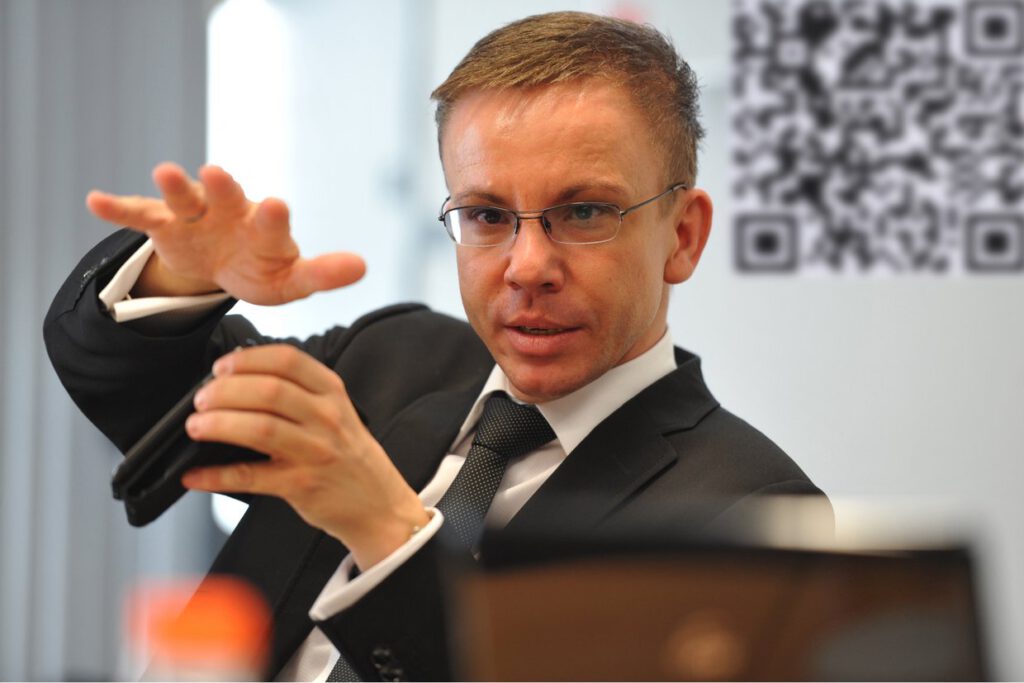
Prof. Dr. Thomas Urban at the Medical Conference at Brandenburg University of Technology Cottbus–Senftenberg on March 12, 2016

The evaluation of the therapy was based on two criteria: the main post-COVID symptoms and the motor fatigability parameters, the latter providing an indicator of mobility. In general, positive effects were observed in terms of both the main symptoms and the motor and cognitive fatigability parameters.[6] In the end, positive therapeutic effects were detected, as was the benefit of the blended therapy approach, which can also be integrated into the existing healthcare system. Not least, the therapy enabled those affected to learn to cope with their reduced energy levels while making effective use of their remaining capacities. This is an important first step in offering patients the chance to actively participate in social or professional life again.

Professor Urban submitted his postdoctoral thesis entitled “Sektorenübergreifende beanspruchungsgesteuerte multimodale Blended Therapy für Post-COVID-19-Patienten mit Fatigue und sensomotorischer Instabilität” to the Department of Healthcare Science at the Institute for Medical Technology at the Brandenburg University of Technology Cottbus-Senftenberg.


[1] See Urban 2025, Sektorenübergreifende beanspruchungsgesteuerte multimodale Blended Therapy für Post-COVID-19-Patienten mit Fatigue und sensomotorischer Instabilität, pp. 10–24, (manuscript) and https://www.kvberlin.de/fuer-praxen/aktuelles/themen/thema/long-covid.

[2] See Urban, Thomas et al., Fatigue und sensomotorische Instabilität. Neurologisch kontrollierte Konversion von Post-COVID-19-Patienten, in: Nervenarzt (2024:95, pp. 1104–1115), p. 1107

[3] “Fatigue is characterized by physical (especially motor), cognitive, and/or mental exhaustion that is often subjectively severely limiting, disproportionate to the preceding exertion, and cannot be alleviated by sleep.” (See ibid., p. 1106) Another characteristic is the unpredictable onset of exhaustion, which in turn affects the individual’s energy balance.

[4] In cases of energy depletion, fatigue, and similar conditions, it was generally recommended that those affected take it easy.

[5] The stress reactions can in turn be somatic, cognitive, and also emotional in nature. One problem in avoiding crashes is that there is no proportionality between actual stress and the triggering of breakdowns. Technical possibilities allow stress to be controlled in real time, which in turn helps to avoid breakdowns. (See ibid., p. 1110)

[6] Without going into the details of the evaluation here, it is important to point out a problem that highlights the challenges of therapeutic approaches. Women experienced a worsening of secondary psychosomatic symptoms: one explanation for this is the faster course of therapy in men and the resulting longer stress in women, overconfidence, and evasive behavior, especially in young women. Therapies must understand these particularities and take them into account in their treatments in order not to jeopardize other successes.
Panta rhei. Materials science and its view of the dynamics of the world

Panta rhei. Materials science and its view of the dynamics of the world

Heraclitus’ Greek aphorism, according to which everything flows, takes on additional significance in the field of materials science. The principle of eternal becoming and change can be translated here as meaning that nothing is truly fixed and, contrary to expectations, some things are not really sharply separated. This is a unique perspective on the structure of materials and their relationships, on the interplay between substances and things. And what all this has to do with the production of modern microchips, which are found in our smartphones and smartwatches, will be discussed on the following pages.

At first, it makes sense to introduce the subject itself: Materials science is a discipline that lies between chemistry, physics, and engineering, linking these fields in a unique perspective. It is therefore an interdisciplinary field that deals with the research, development, and application of materials. As a science that focuses on materials, it aims to understand mixtures of substances, their interactions, and the resulting properties. It deals with chemical descriptions as well as physical, chemical, and mechanical characterizations, analyses of the structures and composition of substances, and the manufacturing conditions described by factors of thermodynamics and kinetics. The focus is therefore on thermodynamic and kinetic fundamentals for materials that are important in engineering:  approaches are developed through the creation of phase diagrams, the investigation of diffusion processes, and the characterization of internal interfaces.

Furthermore, one subfield of materials science deals with the development of new or adapted materials with specific properties that are tailored to the requirements of certain applications. When we think of the highly specialized materials used in modern microelectronics, for example, which form the basis for miniaturization and increased performance, it becomes clear how materials science taps into innovative potential through its combination of natural science and engineering approaches. This also demonstrates the bridge between basic research and its transfer into application-oriented reality, which is particularly important as a productive link between research and development for universities of applied sciences. 

How do materials scientists work?

Phase diagrams, i.e., representations of phase transitions as a function of various parameters, are useful for understanding the properties of substances and how they change in different states. In these diagrams, phase transitions (from solid to liquid to gas, etc.) are represented by influencing factors such as composition and temperature. The substances or individual components have different relevant properties depending on their state and, among other things, during the transitions, which need to be characterized. These diagrams can be used to investigate thermodynamic and kinetic behavior, which can then be used specifically in manufacturing processes, for example.

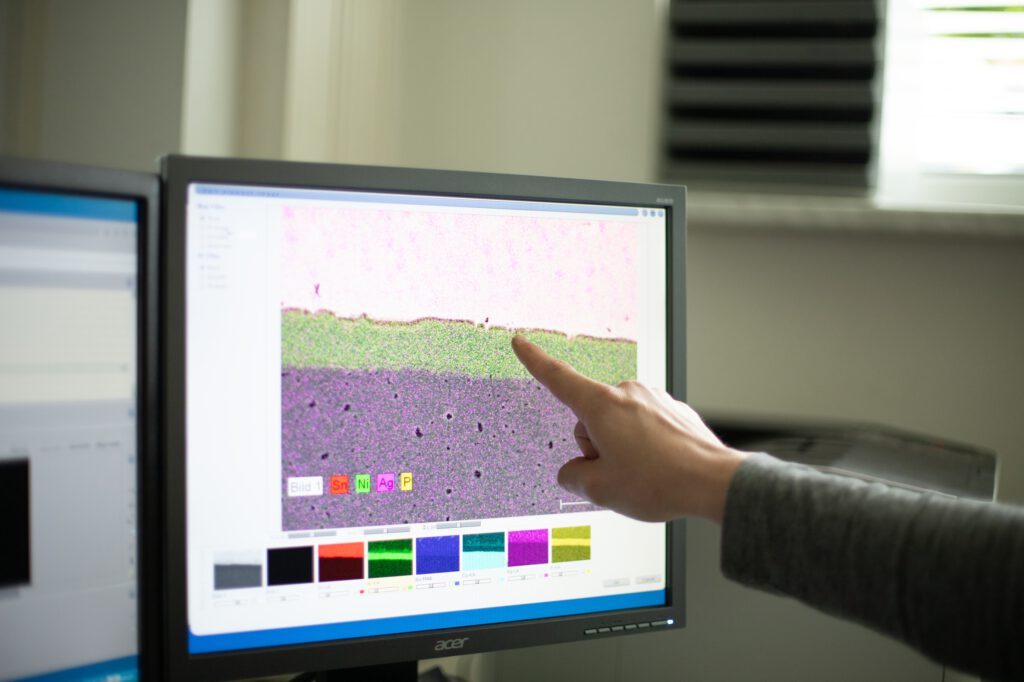
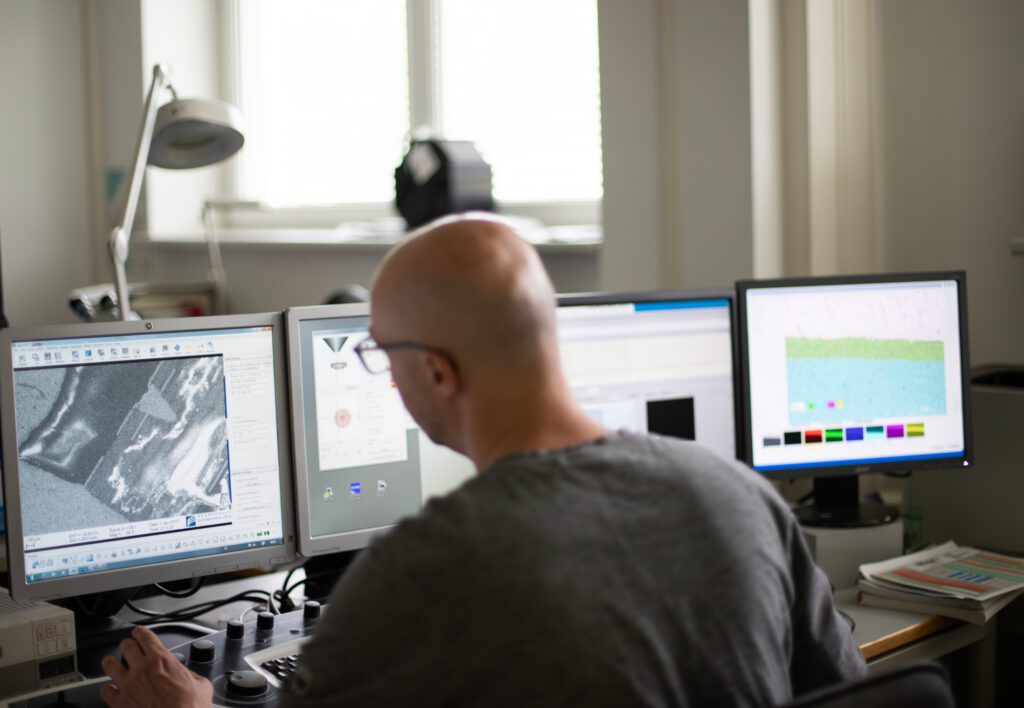
Another aspect within materials science is diffusion, i.e., the interactions between substances, for example, between two metal layers. Our everyday understanding suggests that there are no interactions between the two metals, as both are solid bodies that exist completely separately. However, if we use low-scale observation methods such as electron microscopes, in which the atoms and atomic lattices become visible, the picture changes: to stay with our example, relationships can exist between the metals, which can lead, among other things, to mutual mixing or even to the incorporation of one substance by the other. When different metals and alloys are combined, as in microchip manufacturing in electrical engineering, such effects must be taken into account, which is the focus of materials science.

The investigation of such interdiffusion processes is one aspect of materials science that leads us to Martin Seyring and his research at Schmalkalden University of Applied Sciences. Dr. Martin Seyring joined HSM in October 2022 as a research assistant for scanning electron and optical microscopy at the Faculty of Electrical Engineering. Previously, he researched and taught at Friedrich Schiller University in Jena, where he also earned his doctorate.

Materials science research at HSM

Martin Seyring’s research focuses on phase imbalances at metallic interfaces, which in the field of materials science encompasses processes such as interdiffusion. At HSM, he works with Roy Knechtel, who holds the professorship for Autonomous Intelligent Systems. Both are now conducting research into the development of microelectronic components, known as MEMS. Among other things, this involves pressure, acceleration, rotation rate, infrared radiation, and tilt sensors, which form the technological basis of our modern devices such as smartphones and smartwatches. While Roy Knechtel focuses on the microelectronic design and integration of the sensors, Martin Seyring is dedicated to the integration of the sensors, which is achieved through processes such as bonding and soldering, for example, thus contributing his experience in the metallurgical field of materials science. In order to advance the goal of achieving ever higher integration densities and realizing smaller, more efficient, and more powerful components, the related materials and their complex relationships are increasingly coming into focus.

One goal is to maximize the technical potential when connecting the tiny structures on and with the silicon wafer. Of course, there is not just one bonding process, but various methods that are suitable for different applications. In addition to anodic bonding and, for example, glass frit bonding, metals or alloys can also be used for bonding in metallic bonding, and this is where Martin Seyring’s research and his experience with metallic materials and the behavior of thin films come into play. What are the relationships between the individual metal layers—some of which are created during bonding, soldering, and coating—and how can these be optimized in various ways?

An important aspect of the interactions is time: diffusion and chemical reactions sometimes proceed very slowly, but their consequences are significant.  Naturally, temperature is a factor that accelerates both of these processes. This also presents an opportunity for research: by controlled increases in temperature, a longer period of time can be simulated and the effects on the materials studied. This makes it possible to answer questions such as how hot components can become or how thin the related layers can be, which is particularly relevant from the perspective of efficient high-volume production.

Where technology and ecology meet

Sustainability is an important aspect that leads us neatly to a current research project by Martin Seyring and Roy Knechtel. The title of the project is MatInWLP, which stands for material innovations in wafer-level packaging. Once again, the topics we have discussed so far come together in a new context. In addition to the focus on materials, WLP is at the center of attention: This refers to the attempt to apply the components directly to the wafer, thereby eliminating many individual process steps. In other words, with WLP, the steps involved in building semiconductor chips into usable components take place simultaneously and directly at the wafer level, including the steps of encapsulation and contacting. This project also addresses innovative 3D printing technologies that could play a role in WLP.

To understand the innovative nature of this technology, it is important to consider the current state of chip production: despite or regardless of the enormous increase in the quantity – as well as the quality – of microelectronic components produced, their manufacture still involves an immense logistical effort. The components travel around the globe for the many individual manufacturing steps, leaving a significant ecological footprint. Furthermore, the sometimes sensitive origins of related materials such as cobalt must be taken into account: the trend toward ever greater miniaturization is offset in terms of material consumption by the sheer mass of chips produced. The MatInWLP project combines technological and ecological ambitions: on the one hand, it involves the technical realization of direct integration of the components on the wafer, which is challenging enough in itself. On the other hand, it involves an attempt to minimize not only transport costs but also material usage through direct bundling on the wafer, thereby further reducing the ecological follow-up costs.

The MatInWLP research project is funded by the Carl Zeiss Foundation, which recognizes the technological, economic, and ecological potential of optimizing manufacturing processes and material combinations. Added to this are the advantages of applied sciences, such as their practical orientation, which places particular emphasis on the implementation of the knowledge gained. The project will run until early 2027 and has been awarded €1,000,000 in funding.

The Assistant Excursion (AssEx) 2025: exchange, insights and new perspectives

The Assistant Excursion (AssEx) 2025: exchange, insights and new perspectives

Every two years, a joint excursion for research assistants and doctoral students at Schmalkalden University of Applied Sciences takes place, organized by the Vice President Research and Transfer and Ms Sandy Korb, Head of Department D2. Two years ago, the so-called AssEx went to Nuremberg in Middle Franconia, but this time it was to Würzburg in Lower Franconia.

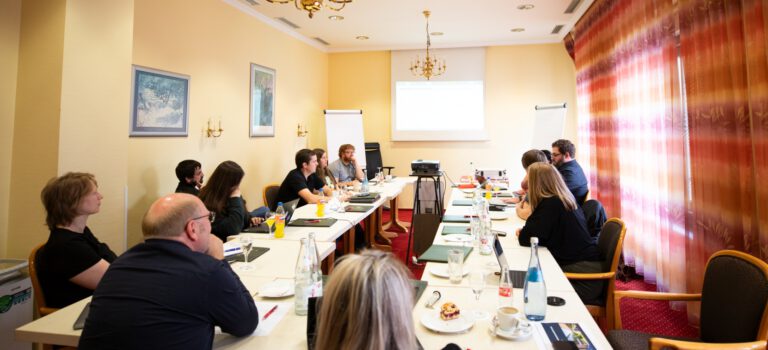
The aim of the assistant excursion is to promote interdisciplinary exchange between young academics at our university. As part of the event, the participants presented their research projects and the topics of their doctoral projects and discussed these in an interdisciplinary manner. The academic program was supplemented by informal discussion rounds in which challenges in the day-to-day work of a doctorate were openly addressed and valuable experiences were shared in an atmosphere of trust.

A central element of the excursion is also a visit to a company. To kick off this year’s AssEx, Brose Fahrzeugteile SE & Co. KG opened its doors at the Würzburg site. The automotive supplier develops and manufactures electric motors for transmissions, steering and air conditioning as well as drives for two-wheelers. The participants were given in-depth insights into the company and its production processes.

With 68 locations in 24 countries, Brose has a broad global presence and remains a family-owned company – a self-image that is reflected both in its mission statement and in its day-to-day work. Brose Würzburg meets the current challenges of the automotive supplier industry with a high degree of innovative strength – not only in terms of products, but also with regard to modern manufacturing technologies, especially in the areas of automation and digitalization.

Three dissertation projects were then presented. The first was Paul Kluth, who is doing his doctorate at the Faculty of Business Law on the subject of location predicates. These are legally relevant terms such as “health resort”, “spa” or “resort”, which are officially recognized by numerous municipalities in Germany. The first task is to describe the phenomenon and put it into a legal context. Even if it is primarily a legal problem in municipal law, the closer you look at it, the more complex the situation becomes. The recognitions under state law are based on laws or ordinances; in practice, the stipulations of associations are of considerable importance. A certain medical-health tourism quality must be present to be awarded the label. Precisely because the labels can be accompanied by special legal consequences with high practical relevance (e.g. in tax law or store opening hours), this creates a legally attractive field of investigation. Thematically, it also fits into the increasingly important discussion on health aspects. A well-founded classification under commercial law is just as much in the interests of the administration as it is in the interests of the economic players concerned.

Yekatarina Strigina is doing her doctorate at the Faculty of Mechanical Engineering and is working on the “RoboTraces” research project, in which she was involved. The project dealt with logistics using micromobiles, which were intended to relieve the burden on older people in particular in their everyday lives by running errands or transporting goods. Moving the robot on sidewalks posed a particular challenge. On the one hand, the uneven terrain and the sometimes poor condition of the paths were difficult for the robot to cope with. Secondly, footpaths are inherently unstructured spaces: they generally have neither clear rules nor markings or unambiguous guidelines, which makes it difficult for autonomous systems to move safely and predictably. Another key task was communication between the robot and its environment, which also includes passers-by. The aim was to determine parameters in this human-machine interaction in order to clarify the conditions for acceptance. Speed, distance and predictability of actions were key factors. The dissertation attempts to integrate decision-making routines into the robot’s reaction patterns, which are fed by an artificial intelligence that has in turn been trained on real behavior and psychological insights. One of the ideas here is posture, which – correctly interpreted – allows conclusions to be drawn about a passer-by’s intentions. The aim is to enable the robot to react quickly, flexibly and reliably to this in its movement sequences. As a large number of autonomous micromobiles will be moving around in public spaces in the foreseeable future, similar projects are needed to proactively counter conflicts on shared paths.

Finally, Lukas Hauck from the Faculty of Electrical Engineering presented the progress of his project since his first presentation at the previous AssEx. In principle, this dissertation is about additive manufacturing of electronic components and exploring the technical possibilities of a 3D integration system: the latter can be described as a machine platform that allows different substrates to be applied to different and inhomogeneous topologies using different processes. In other words, the system offers various technical options for processing (such as dispersion or jetting, i.e. the contactless application of mostly drop-shaped fluids) of very different materials. At the same time, the 5-axis system makes it possible to work not only on a flat plane, but also in 3-dimensional space. This means that electronic components can be produced in positions that were previously difficult or impossible to access. Due to the multitude of possibilities, however, the control and efficient use of the system has also become complex, which poses challenges for prototyping as a field of application for the system. In order to keep the adaptation cycles and finding the optimal technology as minimal as possible, Lukas Hauck attempts to characterize and systematize different technical possibilities, determine different modules and describe possible combinations of different components. These design rules are intended to simplify the handling of the machine platform and exploit the optimum of its technological possibilities.

Finally, Ms. Ludwig reported on the current status of the FH-Personal project with a special focus on the activities in the context of young scientists. For example, the first-ever doctoral website, new impulses in doctoral coaching and current activities in science communication.

The AssEx was rounded off with an evening together and a tour of the city. The informal exchange that accompanies such an evening serves to share experiences of this special phase of an academic career: in addition to research topics, it is also about career planning strategies or very human questions of work-life balance, for example.

As the doctoral students are at least in a similar situation, events such as the AssEx bring together people who can discuss such issues without barriers.