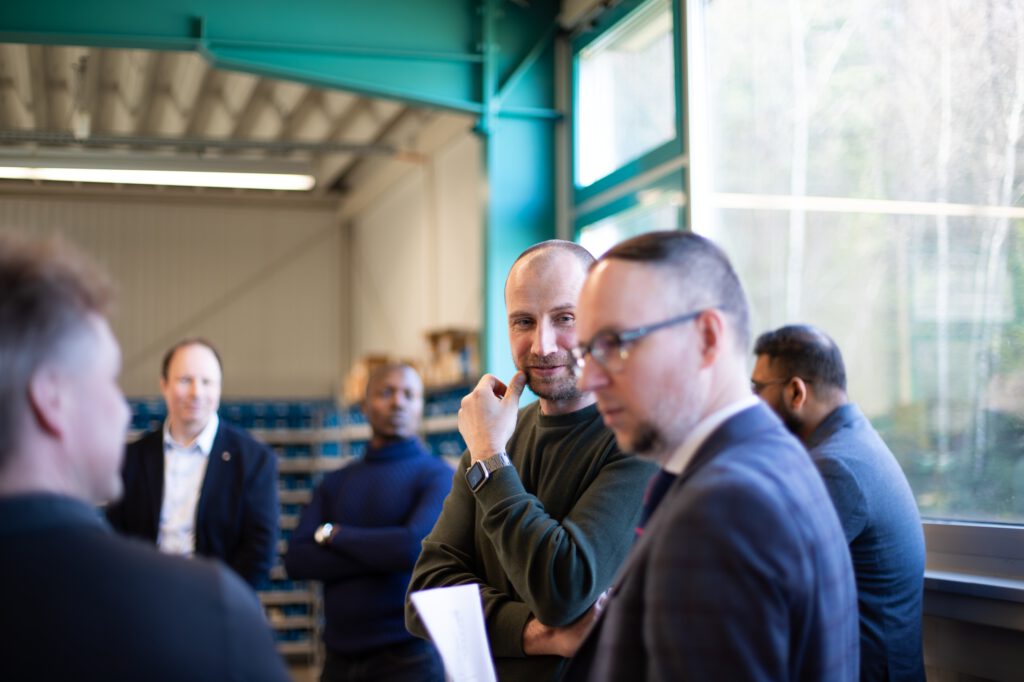
At the end of last week, the one-year 3D-FMM research project, which focuses on the development of a modular and adaptable manufacturing measurement platform, was concluded with a ceremony held at the Suhl-based company PREMETEC. This research project serves as an example of how productive cooperation between regional companies and universities of applied sciences can function in the spirit of mutual knowledge transfer.
The project addressed a specific question that simultaneously opens up a broad spectrum of potential applications: Is it possible to build an automated measurement station that is cost-effective, versatile, and highly precise? Within this framework, the project partners were able to collaborate productively, each bringing their own perspectives: On the one hand, Schmalkalden University of Applied Sciences, specifically a team from Professor Frank Schrödel’s Chair of “Drive, Automation, and Robotic”s led by Nikhil Meduri and Niranjan Kannali Ramesha; and on the other hand, the Suhl-based company PREMETEC, a “hidden champion” in southern Thuringia with expertise in measurement technology and testing systems. A particular challenge was the cost-efficient design of the project, which was also reflected in the use of low-cost robots.
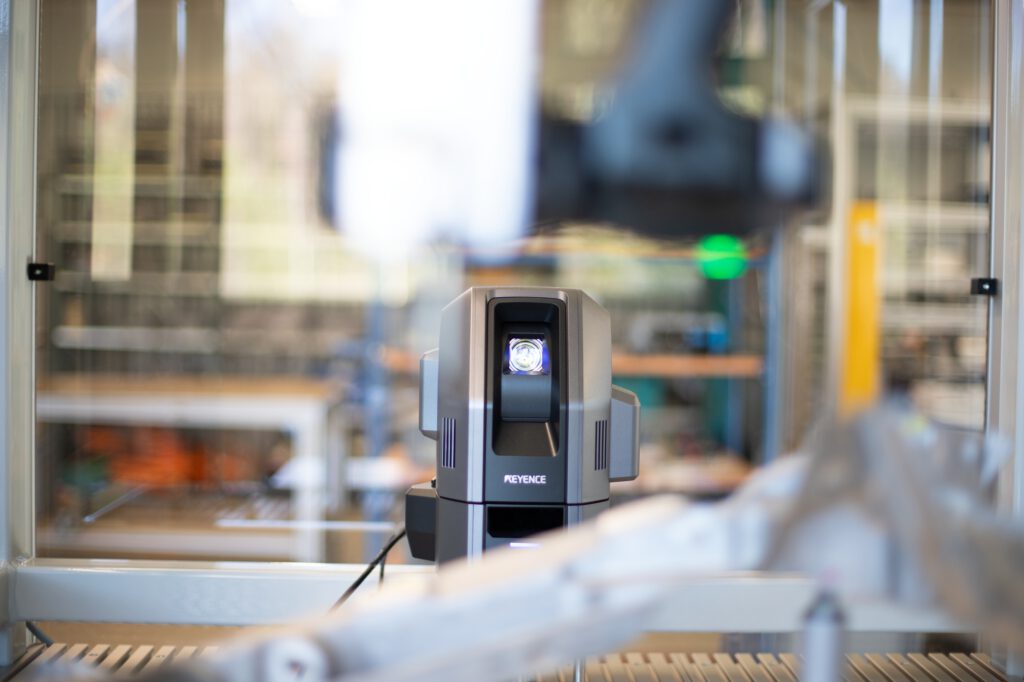
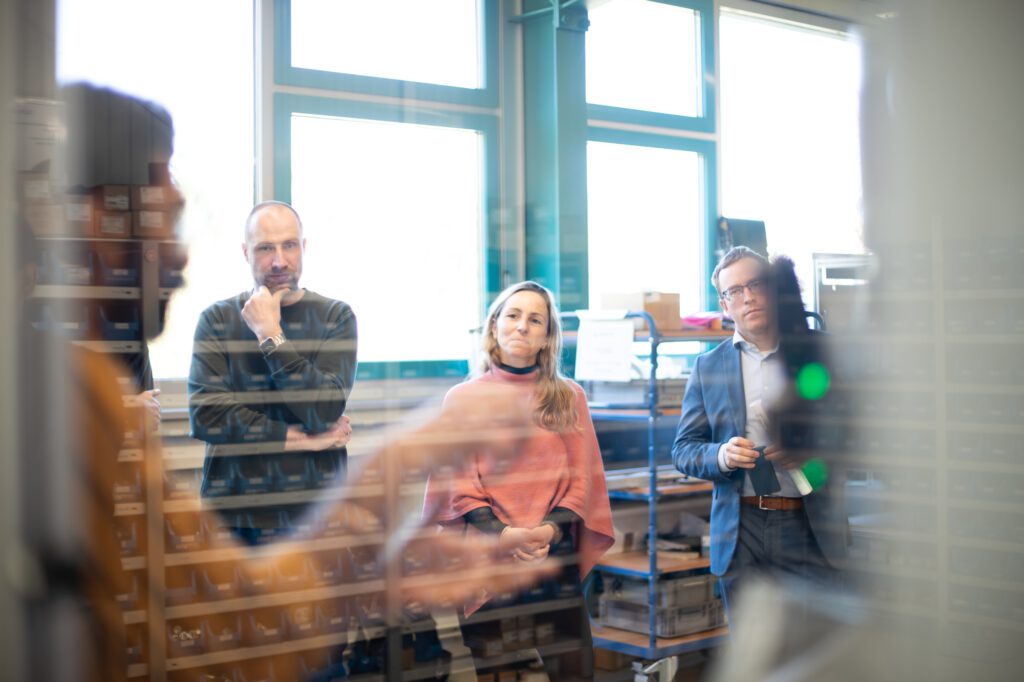
The use of collaborative robots is gaining momentum in the industry: Unlike full automation, the focus here is on human-machine collaboration, which presents challenges for interaction, communication, and safety in the interaction between robots and humans. Cobots can assist with repetitive tasks such as assembly, pick-and-place, or quality control and optimize industrial workflows. In addition, they are easy to program and offer a high degree of workload reduction and occupational safety. Collaborative solutions are suitable for many industrial applications, and the range of different cobot models is expanding more and more. In addition to high-priced variants, there are also cost-effective models that generally perform simple tasks, though compromises must be made in certain operational qualities (such as speed).
As the automation of industrial production processes continues to advance, the question arises as to whether low-cost cobots can be used for specific tasks. Or, to put it another way: How can these cost-effective collaborative robots be technologically enhanced to perform high-precision measurement operations? Before we address this question and its solution, a few words are needed about PREMETEC and the challenges of high-precision measurement technologies.
Measurement Technology: The Balance Between Precision and Flexibility
Manufacturing companies require specific and high-precision systems for measuring their tools, components, and products. To ensure production runs as smoothly as possible, a control system is necessary that integrates seamlessly into production processes. For more than 30 years, the Suhl-based company PREMETEC has been dedicated to this challenge, providing the industry with high-quality solutions for measurement, testing, and automation. As a full-service provider of custom-fit measuring fixtures and automated testing systems, among other products, the company—which currently employs 27 people—develops and manufactures solutions optimized for each individual case. The quantity of products is usually just one, which underscores the high level of specialization and precision of the products.
In addition to the automotive industry and its suppliers, companies from sectors such as medical technology, security technology, and consumer goods production are increasingly becoming customers for these measurement technologies. PREMETEC’s portfolio includes not only compact and integrated solutions but also specialized measuring stations, measuring cells, and test benches. Beyond the actual measurement itself, a key challenge for measurement technologies is to integrate seamlessly into production processes. A production interval of one minute requires that the inspection also take less than a minute. Depending on the application and the complexity of the measurement, this can be more or less difficult.
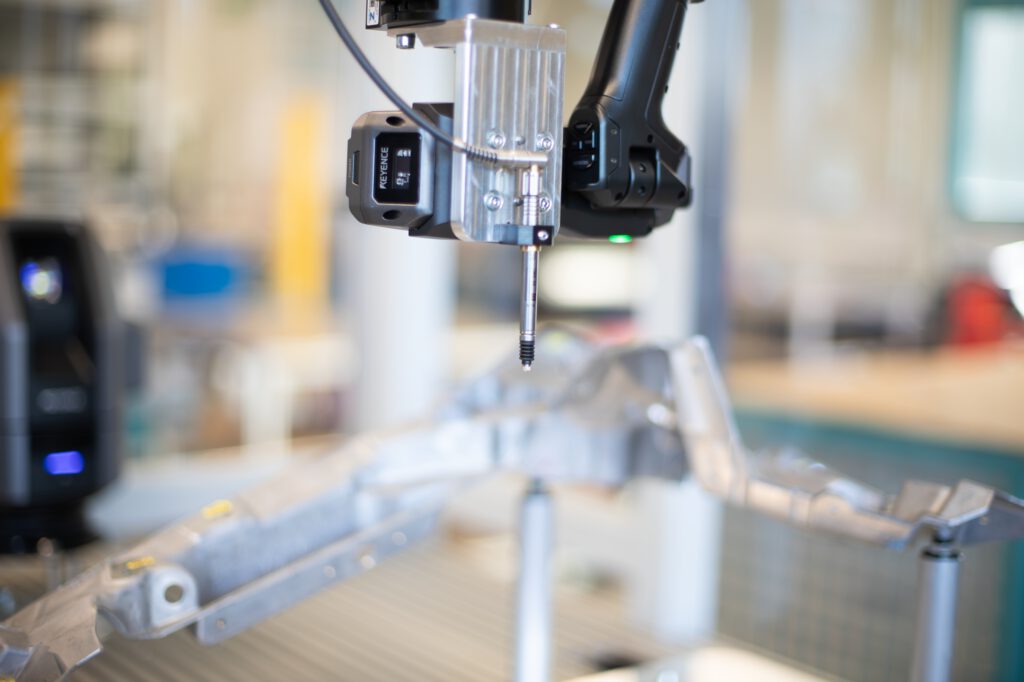
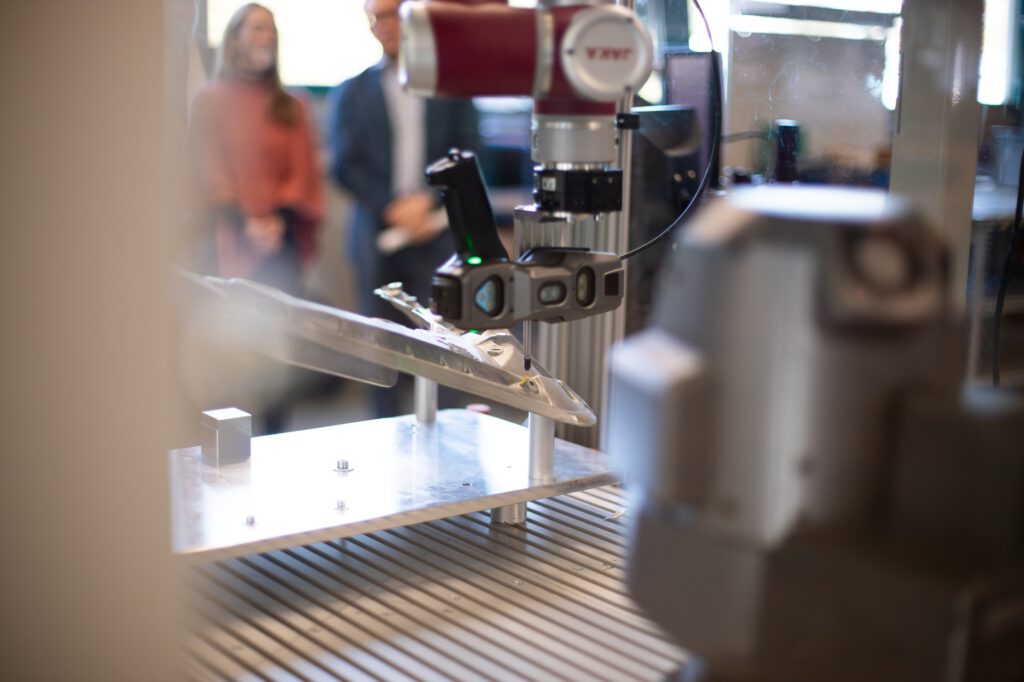
The industry itself faces challenges, which also have consequences for companies like PREMETEC. Declining production volumes are a result of increasingly dynamic production cycles, which subject highly specialized measurement technologies to greater pressure to be profitable—a trend to which the industry must respond. One solution could be to design measurement technology to be flexible within certain limits, thereby making it usable for multiple products. Take, for example, a die-cast component of a tailgate, which has a complex geometry and must be manufactured with high precision to stay within the tolerance limits. The pressing question, therefore, is whether there is a way to avoid having to replace the entire measurement system when there are minor design variations.
One of the key challenges here is to ensure high quality, precision, and process integration while simultaneously allowing for flexibility in variable applications. One solution could involve the integration of cobots, which could be used within a modular measurement system for various measurement tasks. Affordable models, in particular, would enable small and medium-sized enterprises—which are characteristic of Thuringia—to utilize these solutions. The focus of the research project and the context of its application are now clear to us. However, the university’s work packages—that is, the specific areas of focus through which it contributed to the project—remain to be determined.
Cobots: Between Cooperation and Correction
First, it should be noted that the university addressed the topics of measuring the cobot’s precision and the possibilities for correction. Together with Nikhil Meduri and Niranjan Kannali Ramesha, a team from Professor Frank Schrödel’s “Chair of Drive, Automation, and Robotics” worked within and alongside PREMETEC over the course of the project to develop a solution for this task. The university’s project could be divided into three work packages, with the last two packages being interconnected. When measuring the robot’s precision, it is important to bear in mind that this is a low-cost cobot, not a specialized variant designed for such tasks. A consequence of this fundamental condition is that detailed statistics on the robot’s behavior and precision, particularly during continuous operation, have been lacking until now. The university has taken on this task.
The first work package focused on the conceptual design of the project and its organizational coordination. Precisely because the one-year timeline was quite short for such ambitious tasks, clarifying the basic structure was a key aspect. A distinction had to be made between the sensor area—including the measuring head and probe—and the actuator area, i.e., the robot. In particular, communication between the components had to be examined, and a focus had to be placed on the inaccuracy of the robot’s positioning. In short, the question was whether there were errors in positioning and whether these fell within a tolerable range.
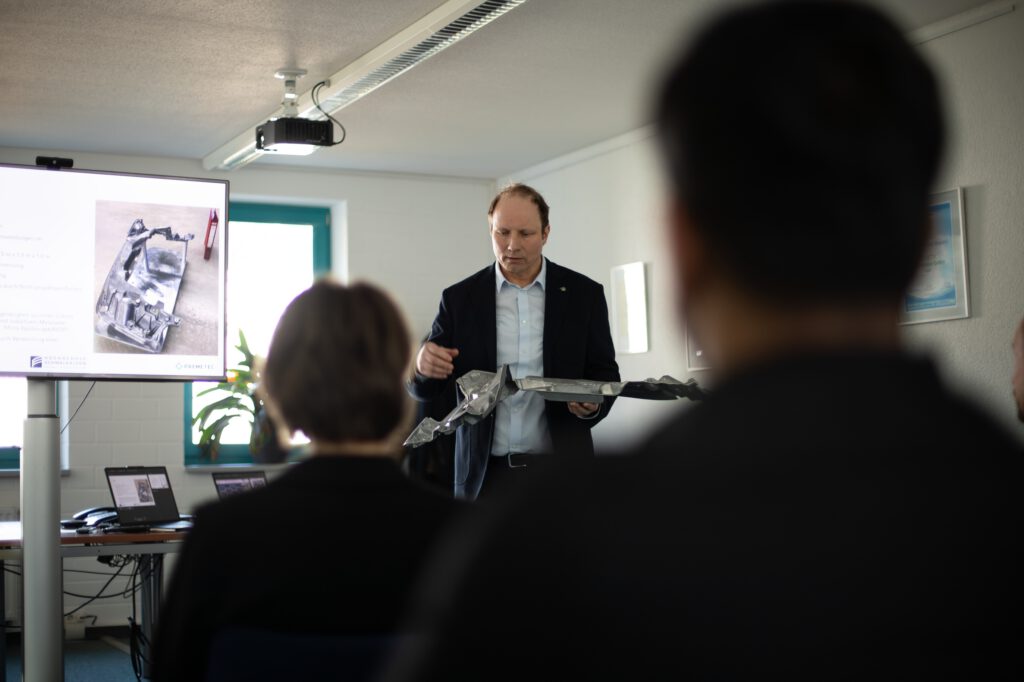
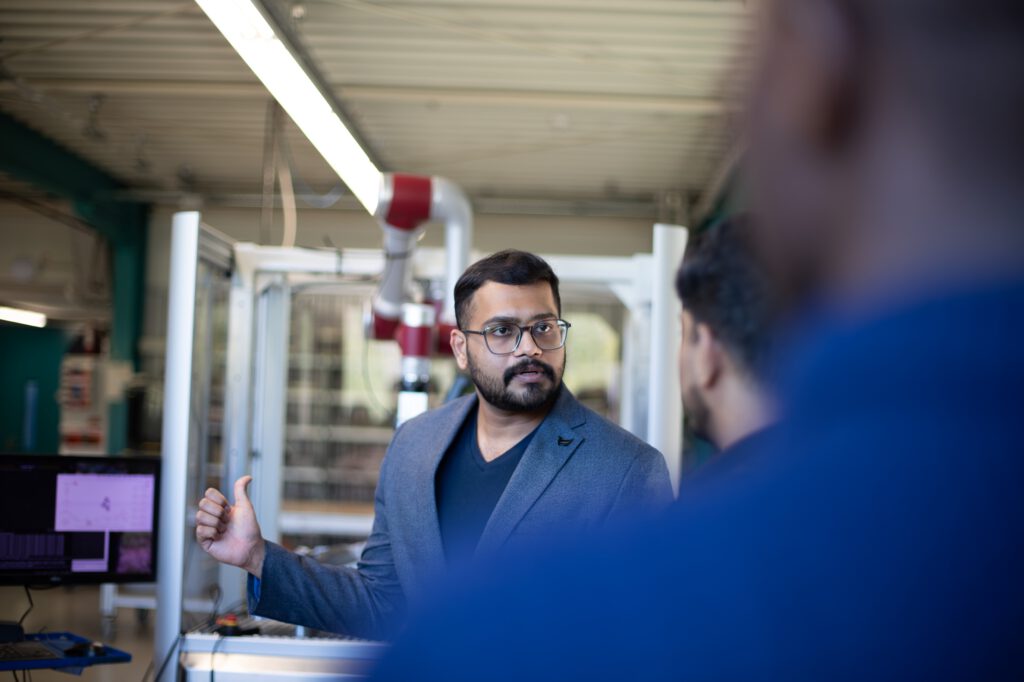
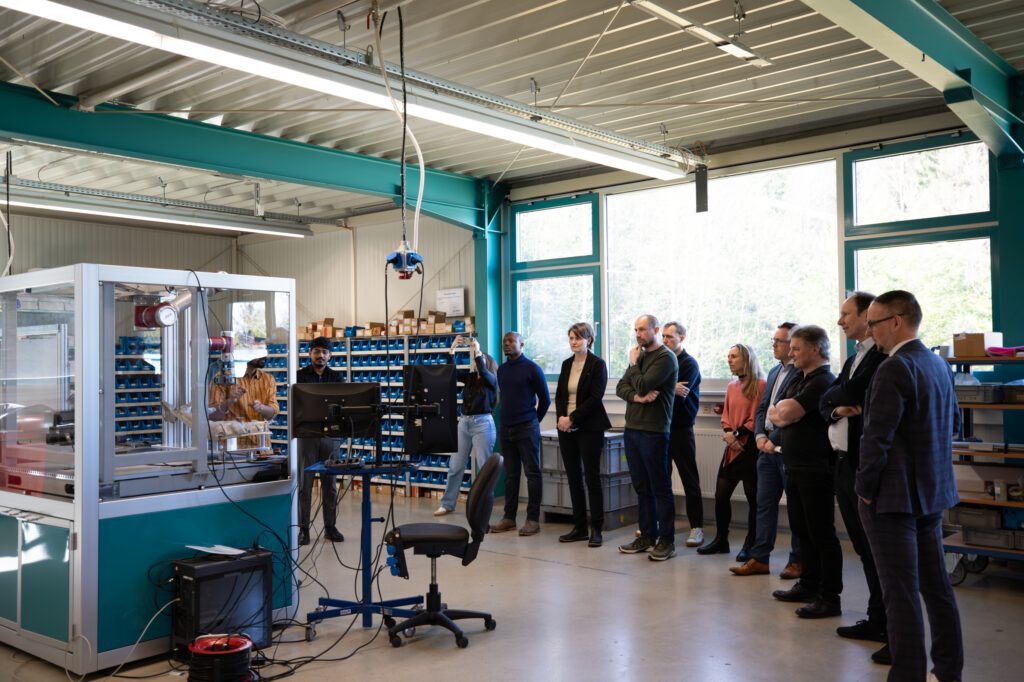
In addition to the development of a control platform, the second work package focused on testing—that is, translating the system into reality. One problem that arose was the increasing inaccuracy of the robot arm as movement complexity increased: the more joints of the arm were activated during a rotational or gripping movement, the less precise the processes became. On the other hand, ensuring repeatability during continuous operation was a focus of the investigation. Among other things, the robotic arm was positioned 600 times at the same location, resulting in increasingly higher inaccuracy over the course of the process. Through this repeat positioning test and the analysis of the data, the Schmalkalden team was able to gain a far more comprehensive understanding of the robotic arm’s real-world behavior than had previously been available from the manufacturer.
This data is needed to assess the arm’s suitability for measurements. At the same time, it is important to keep in mind that repeated self-positioning is not part of these robots’ standard repertoire; rather, their focus is on the repetition of motion sequences. Nevertheless, knowledge of the error rate is crucial for assessing the suitability of the robots and the potential use of low-cost cobots. After analyzing the behavior, correcting the errors was the next step. One problem that emerged was the robot arm’s post-factual stubbornness, which, contrary to objective reality, assumed it was in the correct position. The question now was how to correct the robot’s behavior.
The solution involved the use of a proprietary 6-step algorithm: Using this adaptive software solution, the deviation could be compensated for without the need for complex mechanical interventions. This solution, utilizing a correction matrix, met the high precision requirements inherent in measurement technology applications, as well as the need for functional adaptability—that is, lasting flexibility in the application of measurement technology. This is further supported by the fact that the components required for correction remain external and are not fixed or implemented within the system itself. Thus, this machine learning solution remains autonomous and adaptive, which offers many possibilities for its further use.
Transfer and municipal, federal, and supranational cooperation
The paradigm shift noted in the headline consists in the fact that cobots are no longer merely auxiliary tools for measurement, but are themselves used for active measurement. A prerequisite for this is the precision made possible by the 3D-FMM project. Because precise handling tasks are becoming increasingly relevant in industry, this project also holds immense potential for further applications. In terms of technology transfer, potential can be harnessed both by universities and by companies such as PREMETEC and the manufacturers of the cobots.
The relevance and expected impact of the project for the Thuringian economic region were also evident in the funding provided by the “European Regional Development Fund” and the Thuringian Development Bank (TAB). In addition to Holger Haun from the TAB, Dr. Sebastian Stark was also on the guest list for the closing event; the latter heads the Technology Promotion Division at the Thuringian Ministry of Economics, Agriculture & Rural Affairs. Ariane Winkler and Sebastian Poppner also represented the municipal economic development agency of the South Thuringia Regional Center. The experiences gained in the transfer relationship, as well as the hurdles and challenges the project partners have overcome, can be shared through this network and pave the way for further research collaborations.
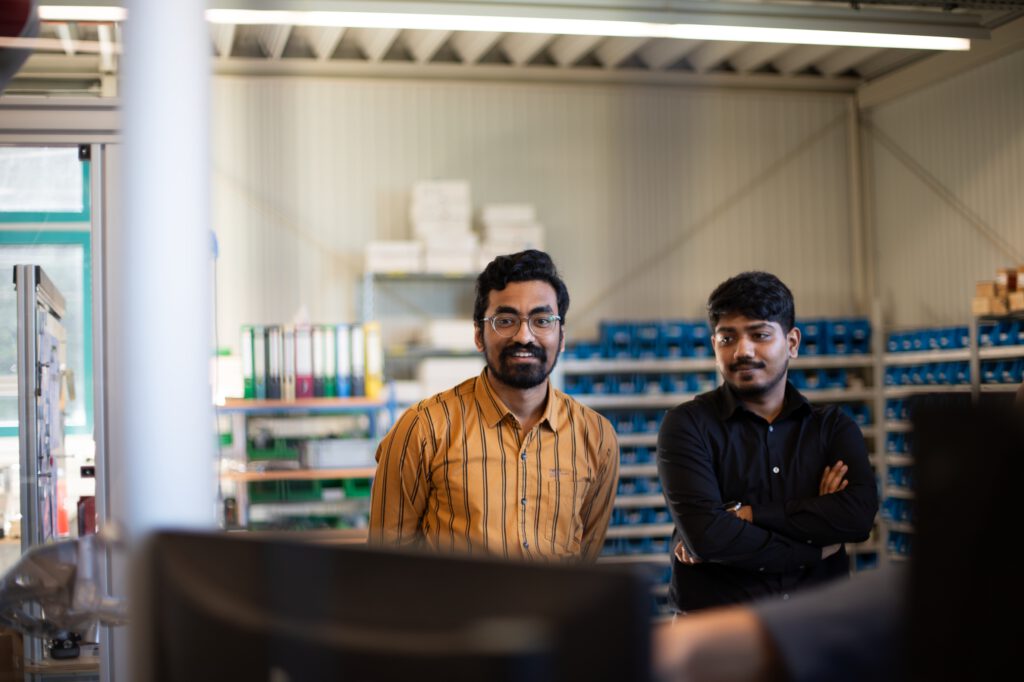
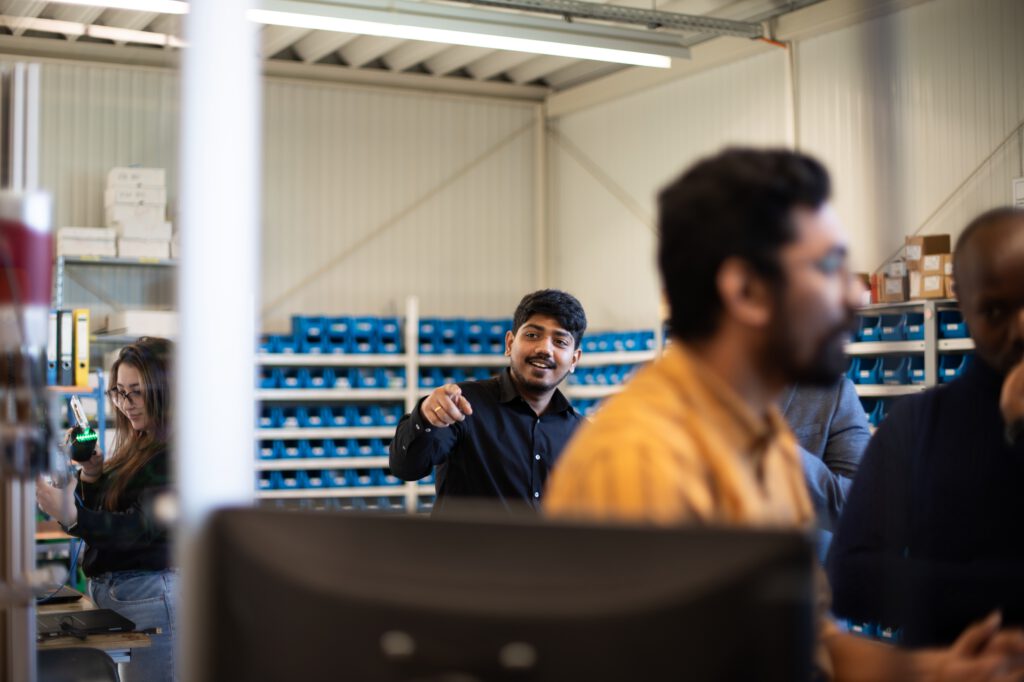
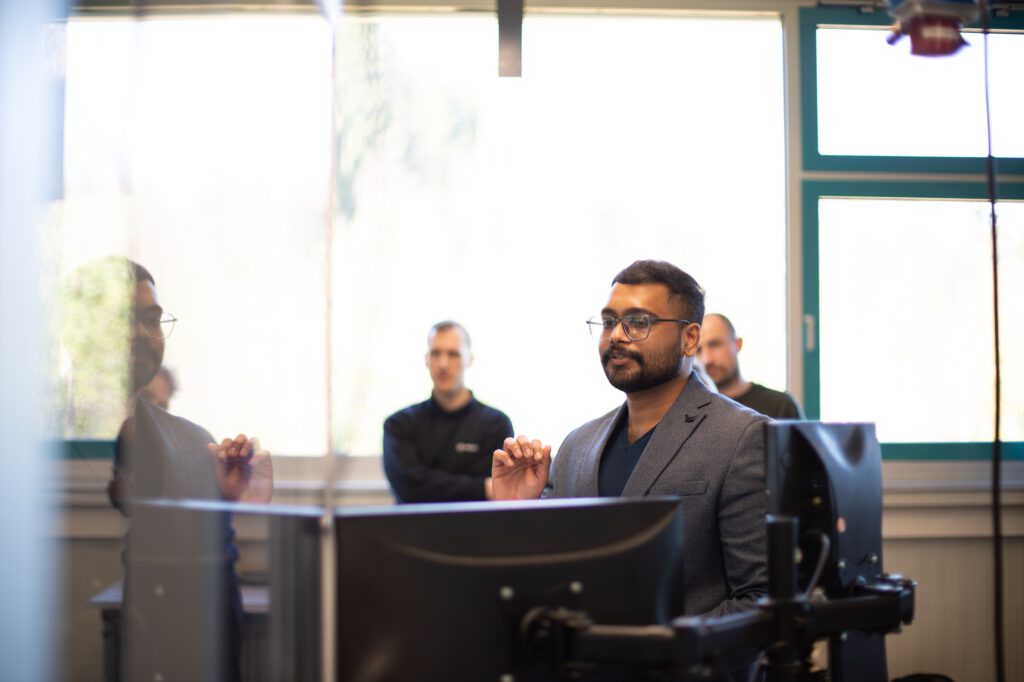
In the spirit of mutual benefit, the cooperation project offered advantages for all participants: For the company, it provides a technology that is nearly ready for the market and meaningfully expands its existing portfolio. For the university, it provided an opportunity for applied research that, in addition to insights and concrete data, also led to several publications. And last but not least, the project demonstrated a successful model for how international students can contribute productively to small and medium-sized enterprises. In this way, many opportunities were ultimately realized.